
Keynote on “Ethical, Global Thinking and Ethical, Local Acting” for a Pakistani SDG post-grad course, 16-20 September 2024
Compassionate actions in local communities and organizations
Hope you enjoy reading the talk I gave this morning at the opening of the SDG post-grad course in Pakistan. The Anthropology Department of Quaid-i-Azam University, Islamabad, Pakistan, in collaboration with two Canadian organizations, The Knowledge Executive (TKE) and Development Impact Solutions (DIS), are sponsoring the course with 28 participants.
As salamu alaykum!
Thanks to Fayyaz Baqir and Dr. Saifullah Choudhry for inviting me to be with you today. I am very pleased that you are focusing on how to localize the global UN SDGs within communities and organizations of Pakistan.
Let us begin with a few moments of mindfulness, becoming aware of our breathing in, and breathing out. Please relax. Please gaze downward in front of you. Breathing in, I am aware of breathing in. Breathing out, I am aware of breathing out. Breathing in. Breathing out. In. Out. (Repeat)
May you and I, and all people and all beings everywhere, realize peace, happiness, understanding, and compassionate action.
I had the pleasure of being in Islamabad, Karachi, and Lahore thirty-one years ago when I was setting up a UNDP program, the Local Initiatives Facility for Urban Environment (LIFE). That is the program for which Fayyaz became national coordinator in Pakistan. I was impressed with the people I met in Pakistan during my visit including Samina Kamal of the local UNDP office and the residents of a slum in Karachi.
At UNDP headquarters in NYC, Dr. Shabbir Cheema, a Pakistani American, was the director of the governance division with which I worked as principal policy advisor for decentralized governance. To this day, Shabbir and Fayyaz are my good friends.
Here in western North Carolina, I often collaborate with Dr. Ameena Zia, a Pakistani American, and head of Blue Ridge Consulting. She was in Pakistan earlier this month, promoting her new book.
I am aware of your country’s political unrest, economic crisis, flooding, violence against religious minorities, and increasing poverty, inflation, and unemployment. My country is also struggling with many such issues.
I want to begin by asking you three questions:
1) What do you love most about your country? Take a moment and write this down. Let’s hear from three people. Would one person please share your answer? Second. Third.
2) What are you most concerned about in your country? Please write this down. Again, let’s hear from three participants. One person, please share your answer. Two. Three.
3) What is your greatest hope for your country by 2030? Please write this down. Let’s hear from three of you. One person, please share. Second. Third.
You may reflect more on these later in your small groups.
As you know, all religious and spiritual traditions around the world and throughout history emphasize the importance of love, kindness, and compassion in relating to our fellow and sister Earthlings, both human and nonhuman.
For example, take the word “compassion.” “Com” means “with” and “passion” means “suffering.” Compassion is to be with suffering, one’s own and others’ suffering, and to take actions that can help relieve that suffering and create happiness.
How can we help relieve the suffering of poverty, climate chaos, ecocide, gender inequality, racism, fascism, fear, greed, anxiety, and much more?
As Rumi, the Sufi mystic, said: Love is the bridge between you and everything.
We humans are part of a local, living planet. This is our locality within the solar system, Milky Way galaxy, and cosmos. As part of planet Earth, there are a multitude of ecological localities of water, soil, minerals, air, plants, and animals, and human localities of families, neighborhoods, villages, cities, counties, states or provinces, nations, networks, organizations, and institutions.
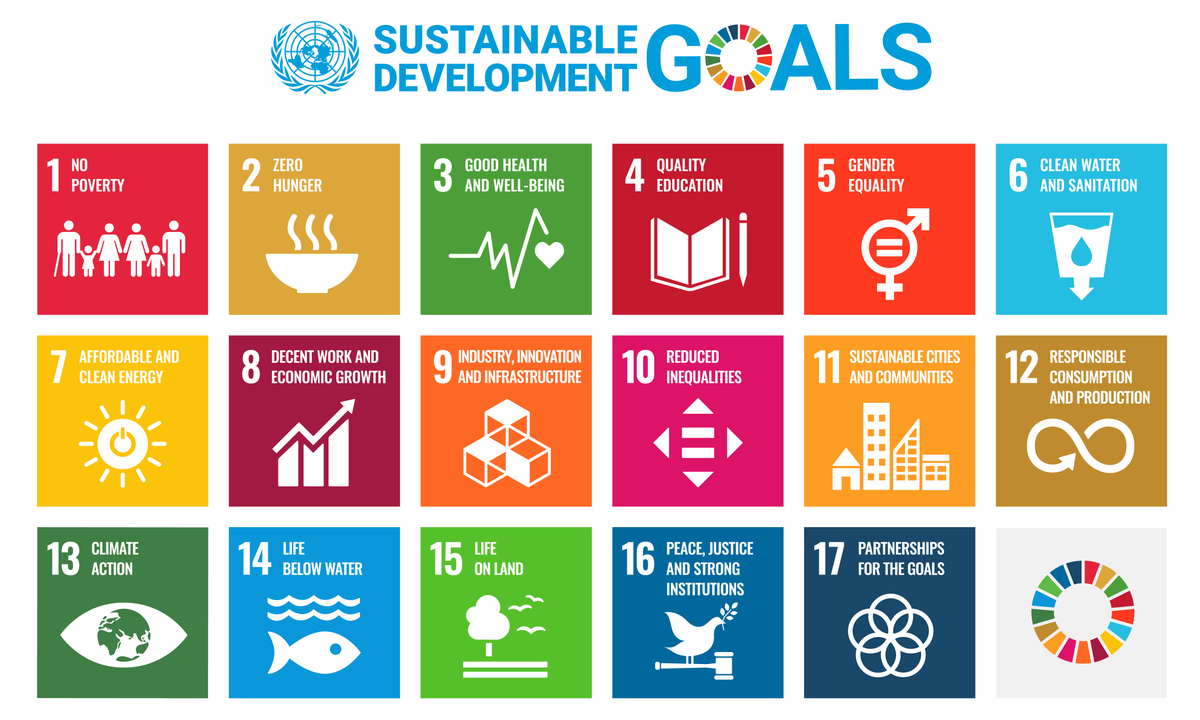
As the creator of the SDGs, the United Nations is both global and local, working in all countries of the planet. The UN has a global-local vision and mission of peace and development for all people and ecosystems as you see reflected in the seventeen SDGs.
After graduate school, in 1969, I traveled around the Earth with a group of colleagues of the Institute of Cultural Affairs (ICA), a nonprofit with which we were working. On our month-long trip, we were not tourists but wanted to experience what local people experience around the world. At the end of the trip, we reflected deeply on what we had experienced.
Later I wrote in my book: “After that trip, I was never the same. I was in love with Mother Earth and with humanity at large. I had been touched by tragic suffering, sublime beauty, spiritual genius, and the ecstasy of being human on this magnificent planet. I had come home. Mother Earth had hugged me – and I had to respond. I had to give my life, my love, my action – to make a difference, to relieve suffering, to advance the human condition.” (A Compassionate Civilization, page 165)
I then worked with the ICA in poor villages and urban slums for 22 years, helping local residents develop their communities and organizations and improve their lives, first in Malaysia, then in South Korea, then back in my home state of Oklahoma, USA, then in Jamaica, and then in Venezuela. I learned so much from local people about caring for their communities.
After that, I worked at UNDP headquarters in NYC serving 193 countries for sixteen years developing global, national, and local policies, programs, and projects in urban development and local governance.
In 1992, at the Earth Summit in Brazil, I announced UNDP’s LIFE program and then travelled and launched the program in twelve pilot countries – Jamaica, Brazil, Colombia, Senegal, Tanzania, South Africa, Egypt, Lebanon, Kyrgyzstan, Pakistan, Bangladesh, and Thailand.
In each country, a national steering committee was formed, and micro projects were identified, funded, and implemented by local residents, local governments, and local nonprofits, in urban slums to improve peoples’ lives and the urban environment.
The small-scale projects included waste management, garbage removal, low-cost sanitation, income generation, paper and plastic bag recycling, improving water supply, tree planting, improving drainage systems, street kids vocational training, creating public toilets, canal improvements, and fresh markets.
Agenda 21 and Local Agenda 21 were also born at the 1992 Earth Summit to promote local actions by government and nonprofits to reduce poverty and pollution and promote sustainable local development.
In 2000, the UN launched the eight global Millennium Development Goals (MDGs). The goals were: Eradicate extreme poverty and hunger; Achieve universal primary education; Promote gender equality and empower women; Reduce child mortality; Improve maternal health; Combat HIV/AIDS, malaria, and other diseases; Ensure environmental sustainability; and develop a global partnership for development.
I created a UNDP program to localize the MDGs, “Decentralizing the MDGs through Innovative Leadership (DMIL)”, conducted in Barbados, Albania, Kenya, the Philippines, and Nepal. The innovative leadership methods we introduced were group facilitation, social artistry, integral thinking, and mindfulness.
In 2006, after retiring from UNDP, I consulted for the UN and the East West Center, taught innovative leadership at NYU Wagner Graduate School of Public Service for ten years, and gave 12 speeches around the world on our critical decade of ecological and social challenges.
In 2015, the UN launched the 17 global SDGs agreed on by the member states of the UN. These goals have specific global targets by 2030, which can be localized at national and subnational levels.
In 2017 my book A Compassionate Civilization: The Urgency of Sustainable Development and Mindful Activism, was published and includes six areas of transformation – environmental sustainability, gender equality, socioeconomic justice, participatory governance, cultural tolerance, and peace and nonviolence. I grouped the seventeen SDGs within these six areas. I find it helpful to use these six areas of transformation.
Since then, four more of my books were published and I have been focusing on being a mindful, global-local activist and author.
Along with helping various groups, I have helped ICA Nepal with its SDG training program and micro projects to implement the SDGs. SDG youth ambassadors in Nepal are trained in social artistry and then implement micro projects at the local level related to one of the SDGs. ICA Nepal has raised some funds for these micro projects. You might want to do the same in Pakistan. The ICA Nepal reports concerning all of this are in your materials. I think that you will find them helpful.
You are also invited to participate in an Asia Pacific Regional Conference on Climate Response, Innovation, and Prosperity, sponsored by ICA Nepal, held in Kathmandu, Nepal, this November 22 – 29, for training, presentations, and discussions. There is also information about this in your course materials.
I am deeply grateful that each of you wants to help localize the global SDGs in your country’s communities and organizations. This is one way to help relieve suffering and create happiness.
Pakistan is continuing to work towards achieving the Sustainable Development Goals (SDGs) through a variety of strategies, including:
· Institutional arrangements
Task forces in the National and Provincial Parliaments review progress and provide legislative support.
· Support units
Seven SDGs Support Units at the Federal and Provincial Government levels facilitate coordination among stakeholders.
· Partnerships
Pakistan is working with a broad range of governmental, private, civil society, and media actors, as well as regional and international partners.
· National SDGs Conference
The 2024 conference emphasized the importance of quality education, particularly for girls, and gender equality.
· Accelerated efforts
Pakistan has expressed a resolve to accelerate its national efforts to achieve the SDGs.
The Sustainable Development Report 2024 indicates that Pakistan has shown moderate improvement in SDGs 1, 7, 9, 14, and 17. This progress should instill a sense of hope and optimism. Similarly, Pakistan has stagnated performance in SDGs 2, 3, 5, 6, 8, 12, and 15.
I believe that “We are living in the most critical time in all of human history, a time to do what is needful or face the direst of consequences. Why do I say that? Never before in the past five thousand years have we faced such colossal dangers and such exhilarating possibilities. The very future of life on Earth is at stake. We face multiple, interlocking crises, any one of which could be decisive—climate chaos, misogyny, systemic poverty, oligarchy, prejudice, and a culture of violence. A whole system transformation is underway, and we are at the brink of either mass extinction or a whole new way of being human on planet Earth. Which it will be depends on what you and I do with our lives.” (A Compassionate Civilization, page 3)
As of today, which one of the 17 global/national SDGs calls to you to help localize it in a micro project? Where and how would you like to do it? Please write this down. Let’s share a few responses. You can discuss more in small groups or in future sessions of this course.
I am glad that you will be studying SDG case studies in this course.
I believe that through your work of localizing the SDGs in Pakistan, you will change individual mindsets and behaviors, and collective cultures and systems.
As you help localize the SDGs, I invite you to reflect on your own experience of helping relieve suffering and creating happiness through your global vision and local actions.
As you care for local communities, human society, and the living Earth with the SDGs, you must also take good care of your own body-mind, your family, and friends.
May you and I, and all people and all beings everywhere, realize peace, happiness, understanding, and take compassionate actions.
………………………….
Q and A facilitated by an SDG course staff member. Ask the participants, and give them time to think, and respond, one question at a time:
1. What words or ideas do you recall from the talk?
2. What were some of your reflections and feelings during the talk?
3. What was most useful or motivating for you in the talk?
4. What are your questions about anything in the talk?
5. How will your work of localizing the SDGs be different because of the talk?
Closing of this session
"Dear Professor Robertson,
I wanted to take a moment to express my gratitude for your recent lecture on the Sustainable Development Goals as part of the "SDGs: Global Goals and Local Actions" course. Your insights were not only informative but also incredibly inspiring. The way you connected the concepts to real-world applications made the material engaging and accessible.
Your passion for the subject truly shines through, and it has motivated me to delve deeper into the SDGs and their impact on our communities. Thank you for your dedication to raising awareness and fostering understanding of such an important topic.
Warm regards
Zohaib Hassan"
From Chindedu Marcel Emecheta: "In the next six years
It will be an end to this but not end to humanity and Society
So sad 😪 that over 90% of the SDGs remains unattainable and unheard
As of yesterday I'm still being asked by a very civilized individual
Please what's SDGs"